
015 — Three Frames from Yesterday

Three Frames from Yesterday I often find it useful to look at a small group of photographs rather than evaluating every image individually. Three frames can establish a relationship that none of them could create alone. One photograph may introduce a place. Another may show a person within it. The third may add a detail that changes how the first two are understood. I like this possibility because it moves photography away from the idea of the isolated perfect image. A sequence can be more interesting than a single photograph. It can create rhythm, contrast and a sense of time …
014 — No Particular Destination

No Particular Destination I do not always need a destination to begin photographing. Some of the most useful photographic time comes from walking without a specific assignment or a fixed idea of what I should find. Without a predetermined subject, I become more receptive to what is happening around me. This does not mean walking without intention. I still pay attention to light, distance, people and the structure of a scene. But I try not to force the experience into a project before it has had a chance to develop. A photograph can appear in an unexpected place, during an …

013 — Notes from an Empty Room

Notes from an Empty Room An empty room is never entirely empty. There are objects left in place, marks on the walls and small signs of the people who occupied it. Even after someone leaves, the room retains a certain arrangement of their presence. I find these spaces interesting because they do not offer much information, yet they suggest a history. When photographing interiors, I try to avoid making them look more interesting than they are. I prefer to work with what is already there: the available light, the objects and the relationship between the space and the frame. A …

012 — The Discipline of Waiting

The Discipline of Waiting Photography has a way of making patience visible. Not every scene offers an immediate photograph. Sometimes the light is wrong, the composition is incomplete or the relationship between the elements has not yet developed. I have learned to accept that waiting is part of working with a camera. There is a difference between waiting with a purpose and simply hoping that something interesting will happen. The first requires attention. The second can become passive. When I stay with a scene, I try to understand how it changes. People enter and leave. Shadows move. Small details appear …

011 — In Praise of Imperfectionanalog

In Praise of Imperfection Technical perfection has never been enough to make a photograph interesting. A perfectly exposed image can feel empty. A photograph with an imperfect frame or unexpected movement can sometimes hold my attention much longer. This does not mean that mistakes automatically become artistic decisions. Poor technique is not a substitute for intention. But I have become less interested in correcting every irregularity simply because it exists. Film grain, uneven light, slight movement and the natural limitations of a camera can all become part of the visual language of an image. I think the problem begins when …

010 — Digital Memory, Analog Mind

Digital Memory, Analog Mind I do not see analog and digital photography as opposing systems. They are different ways of working, each with its own limitations and possibilities. Film introduces a particular relationship with time. Every frame has a physical cost, and the process requires decisions before the final image …

009 — The Invisible Everyday

The Invisible Everyday There are parts of everyday life that become almost invisible through repetition. The same journey. The same neighborhood. The same people performing familiar routines. Because these things are predictable, we often stop paying attention to them. Photography interrupts that habit. When I return to an ordinary scene with a camera, I sometimes notice details that were always present but never particularly important to me before. A reflection, an expression, the way someone occupies a small part of a large space. I do not think photography necessarily makes ordinary life more beautiful. It makes us look at it …

008 — The People Between Places

The People Between Places I am interested in people when they are not necessarily doing anything remarkable. Waiting for transportation. Walking home. Sitting alone. Moving through a place they know well. These ordinary situations are often overlooked because they do not appear to have a clear beginning or conclusion. But they are part of how people actually live. In documentary photography, I find it important not to confuse significance with spectacle. Not every meaningful photograph needs an extraordinary event. Everyday life contains enough complexity on its own. I look for relationships between people and their surroundings, for gestures that reveal …

007 — The Stranger in the Photograph

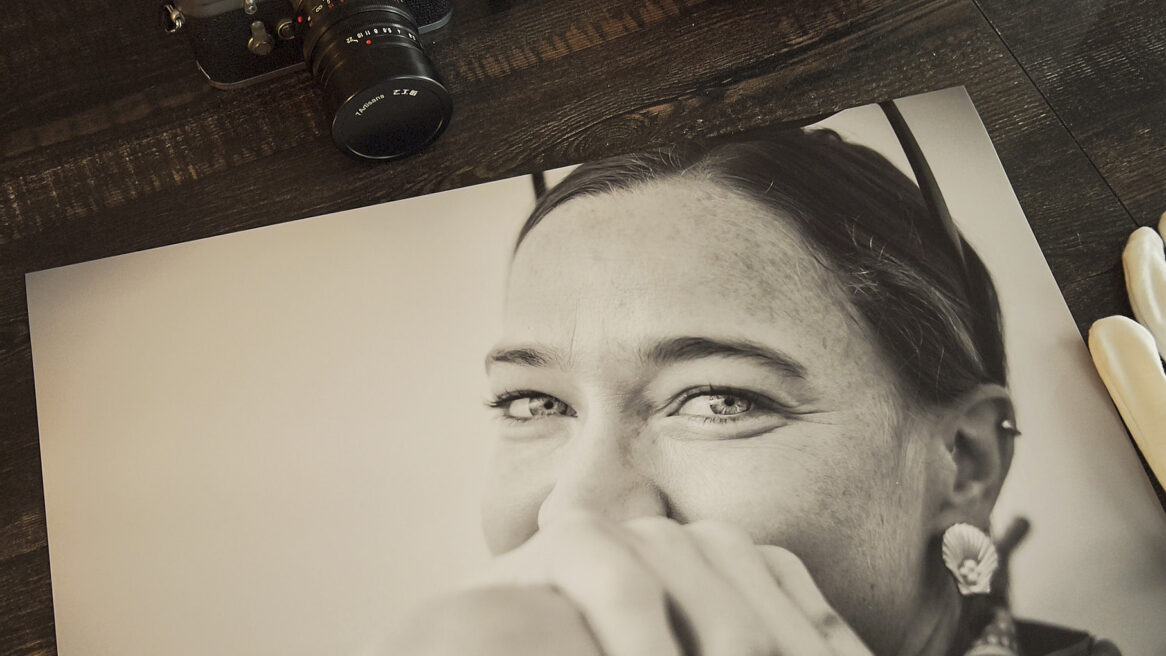
The Stranger in the Photograph A portrait is a complicated exchange. The person in front of the camera brings an entire life into the frame, while the photographer is usually allowed to see only a small part of it. I find this relationship particularly interesting. A photograph can reveal something about a person, but it can never explain everything. An expression, a posture or a particular gesture may suggest a personality, yet there is always more beyond the image. I try to remember this when photographing people. The camera gives me the opportunity to record an appearance, not to claim …

006 — The Photographs We Keep

The Photographs We Keep Not every photograph deserves to be kept, and not every photograph we keep is necessarily good. I think about this whenever I review a body of work. There are images that immediately attract attention because of their composition, light or technical qualities. There are others that seem ordinary at first but become more important with time. Editing is therefore not simply a process of selecting the strongest photographs. It is also a process of deciding what deserves to remain. I try to consider how an image contributes to a larger body of work. Does it introduce …