




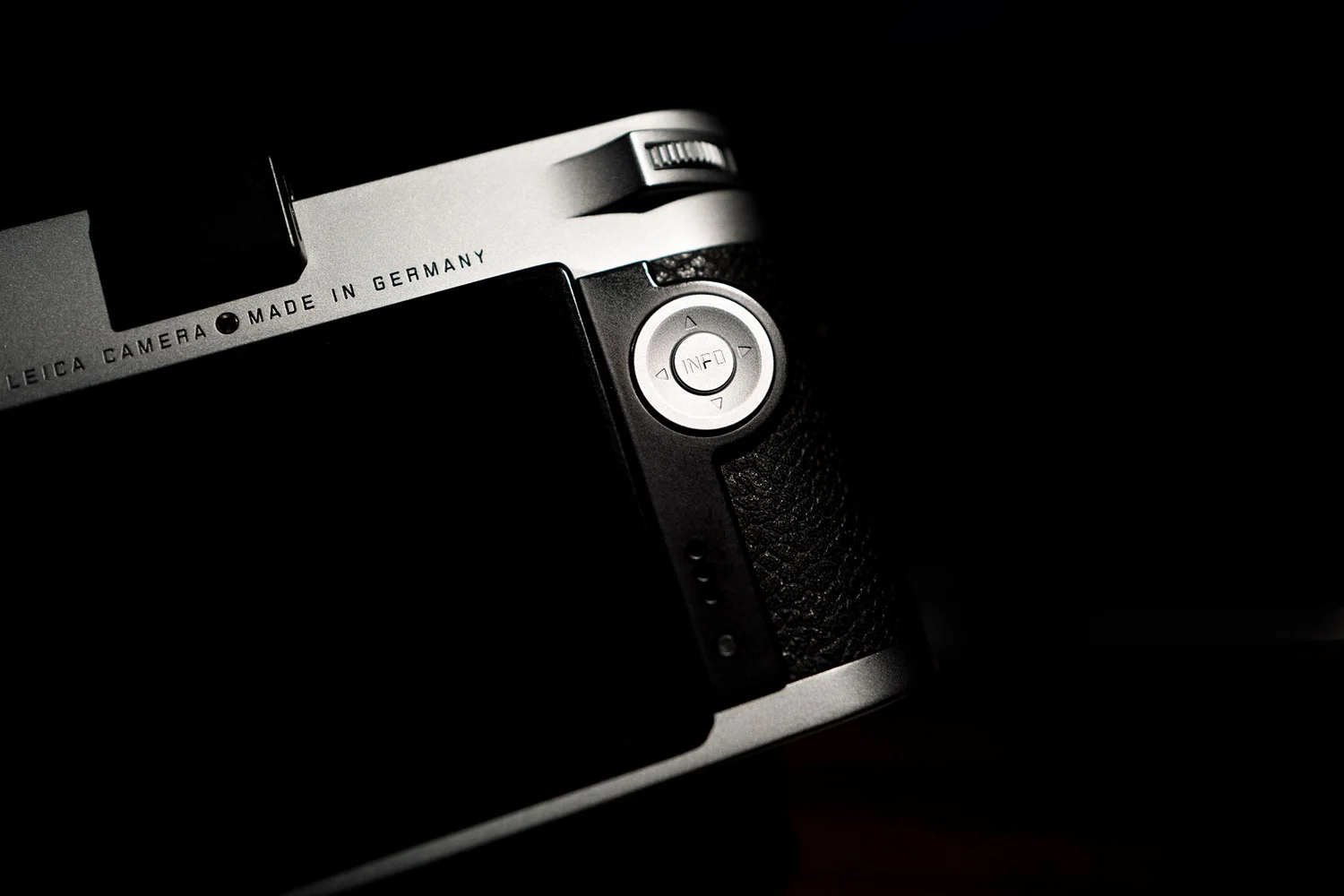
Leica M240, patience, and the search for something real.
There was a time when I thought that a better photograph meant a sharper image, better colors, more detail, and a technically perfect exposure. Like many photographers, I spent years learning how to control every aspect of the image. Focus, light, exposure, composition. Everything had to be right.
And then, somewhere along the way, I started questioning what being right actually meant.
We live in a time when technology can make almost any photograph look technically perfect. Modern cameras recognize faces, track eyes, follow moving subjects, and capture details that were once difficult to imagine. Software can remove imperfections, reconstruct details, change colors, and even generate things that were never in front of the camera.
Artificial intelligence is taking this even further.
There is nothing inherently wrong with that progress. Technology has always been part of photography, and I have no intention of pretending otherwise. But I have started feeling that, in the middle of all this perfection, something else deserves our attention.
Something less polished. Less predictable. Something that feels human.
I am not necessarily looking for the sharpest image anymore. I am looking for an image that makes me feel something. I want texture, atmosphere, imperfect light, visible grain, and colors that don’t always need to be vibrant. I want photographs that feel as though they belong to a particular moment, rather than images that have been carefully perfected to satisfy a technical standard.
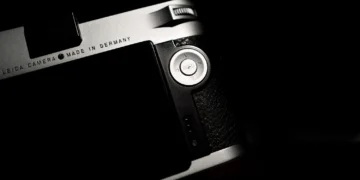
Perhaps that is one of the reasons I found myself drawn to the Leica M240.
A different way of seeing
The Leica M240 is not a new camera, and that is precisely part of its appeal to me.
It is a 24-megapixel full-frame digital rangefinder. It doesn’t have the speed, automation, or sophisticated autofocus systems found in today’s cameras. It doesn’t try to anticipate every movement or make every photographic decision on my behalf.
Instead, it asks something from me.
Focusing with a Leica M is a completely different experience from using a modern autofocus camera. Through the optical rangefinder, I see two overlapping images. By turning the focusing ring on the lens, I bring those images together until they align. When they become one, the subject is in focus.
It is a mechanical, visual, and rather personal process.
It requires practice and a different understanding of distance. You need to anticipate where your subject will be, recognize the available light, and become familiar with the relationship between your lens, your aperture, and the space in front of you.
It is not always easy. Sometimes the focus is perfect. Sometimes it isn’t.
But I have started enjoying that responsibility.
With autofocus, the camera often takes care of the technical part before I have even finished thinking about the photograph. With the rangefinder, focusing becomes part of the photographic experience itself.
I have to slow down, observe, and make a decision.
And that changes the way I approach a scene.
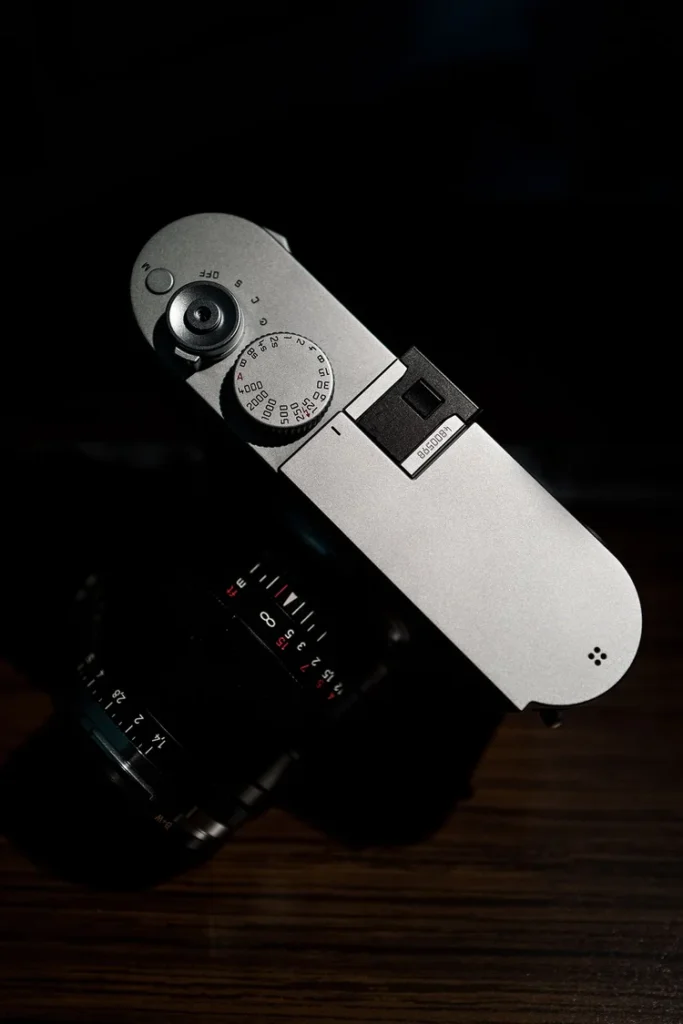
The importance of slowing down
One of the things that separates the M240 from contemporary cameras is its shooting speed. It can shoot approximately three frames per second in continuous mode. By today’s standards, that is modest.
But I don’t need a camera that can capture twenty frames of the same moment.
I want to understand the moment before I photograph it.
The combination of manual focusing and a more deliberate shooting experience encourages me to spend more time observing. Instead of continuously pressing the shutter and hoping that one frame will be right, I find myself considering the composition, anticipating movement, and waiting for the elements to come together.
There is a certain discipline in that process.
Of course, documentary photography doesn’t always give you the luxury of waiting. Some moments happen unexpectedly, and sometimes you have only a fraction of a second to react. I don’t believe that using a manual camera automatically makes someone a better photographer.
But I do believe that the limitations of a camera can influence the way we see.
The M240 reminds me that photography is not simply about capturing everything that happens in front of us. It is also about deciding what deserves to be photographed.
And sometimes, the photograph you don’t take is just as important as the one you do.
Against the idea of perfection
I have become increasingly interested in photographs that don’t look completely polished.
I like grain. I like subdued colors. I like the way certain images retain a little softness, how shadows can become dense, and how highlights can create an atmosphere that is not necessarily technically perfect.
I don’t want every color to be saturated or every shadow to reveal every detail. I don’t want every photograph to look as though it has passed through the same digital finishing process.
I want some character to remain.
For me, grain is more than a visual effect. It introduces a texture that can change the emotional relationship we have with an image. It can make a photograph feel quieter, more intimate, or connected to a particular visual memory.
The same happens with color.
I am drawn to restrained palettes, slightly faded tones, and colors that feel natural rather than exaggerated. I want the image to breathe. I want the light to have room to exist without trying to recover or correct everything.
This doesn’t mean that the M240 automatically produces grainy photographs or faded colors. Those qualities are decisions I make through exposure, the choice of lenses, white balance, and post-processing.
The camera is not a shortcut to an aesthetic.
It is simply a tool that fits the direction in which I want to take my photography.
I would rather spend time understanding the light and the character of a scene than trying to make every pixel look perfect.
Photography in the age of artificial images
Perhaps the most interesting part of this personal search is the moment in which it is happening.
We are entering an era in which the distinction between a photograph and an artificially constructed image is becoming increasingly complicated. Images can be generated, altered, reconstructed, and manipulated to a degree that challenges our traditional understanding of photography.
For documentary work, this raises important questions.
What does it mean to photograph something that actually happened? What responsibility do we have toward the people we photograph? And how much can we alter an image before it stops representing the moment we witnessed?
These are not questions that a camera can answer.
But they remind me why I remain interested in documentary photography.
For me, the photograph begins with being there. With looking at someone, walking through a place, observing a situation, and paying attention to things that might otherwise go unnoticed.
The camera records a fraction of that experience, but it cannot replace it.
I don’t need my photographs to compete with artificially generated images in terms of perfection. I am much more interested in preserving the imperfections, circumstances, and unexpected details that make a real moment unique.
A slightly missed focus, an imperfect exposure, or a color that doesn’t look exactly as expected doesn’t necessarily ruin a photograph.
Sometimes those things become part of its character.
And sometimes, they remind us that a human being was standing behind the camera.
Finding the pleasure again
After two decades behind a camera, I find myself returning to something that is difficult to describe but very easy to recognize when it happens: the simple pleasure of making a photograph.
There is something satisfying about looking through an optical viewfinder, turning a focusing ring, considering the light, and waiting for the right moment.
No complicated autofocus settings. No endless sequence of frames. No expectation that every photograph must be technically flawless.
Just me, the camera, the lens, and whatever is happening in front of me.
The Leica M240 doesn’t make photography easier. In some situations, it makes it considerably more demanding. But perhaps that is exactly what I have been looking for.
I don’t want to spend all my time thinking about specifications, resolution, autofocus performance, or whether my camera is still competitive with the latest technology.
I want to spend more time looking.
I want to be more patient with the people I photograph, more conscious of the places I visit, and more attentive to the small details that make an image meaningful.
Maybe this is not about going back to the past or rejecting everything that modern photography has achieved.
It is about finding a personal balance between technology and intention.
I don’t need every photograph to be perfect. I don’t need every detail to be visible. And I certainly don’t need every image to look like every other technically flawless image circulating through our screens.
I want photographs with personality, atmosphere, and a sense of presence.
After twenty years, perhaps I am not looking for a better camera.
Perhaps I am looking for a better relationship with photography.
I would rather make a photograph that feels something than one that simply shows everything.

